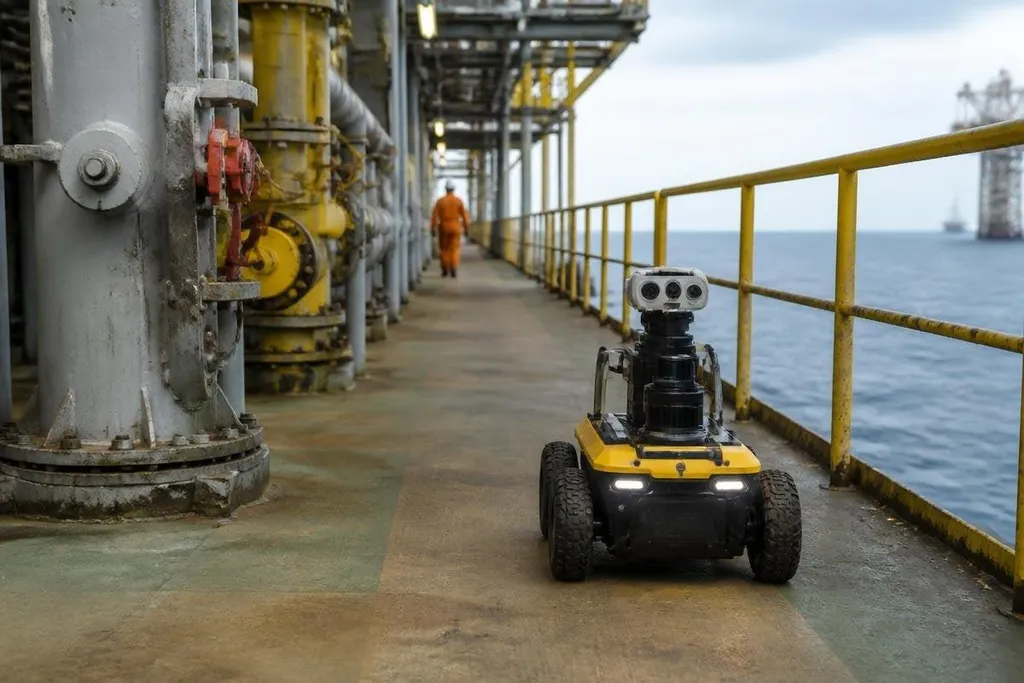
An oil platform combines heavy equipment, high temperatures, flammable fluids, and long distances between work areas. Robots could take on some inspection and monitoring tasks, giving workers better information before someone enters a risky space.
- Robots can inspect places that are hard or unsafe for people to reach.
- Sensors can spot heat, gas, leaks, damage, and unusual machine noise.
Where robots can help
A mobile robot could patrol marked routes around an offshore installation while carrying cameras, microphones, gas sensors, or thermal cameras. The operator may work from a safer control room, while the robot sends back images and sensor readings from the work area.
That first look matters during routine checks and after an alarm. A robot can inspect a pipe section, valve area, stairway, or enclosed space before a technician walks in with tools. The result is better planning, not a reason to skip the human inspection that follows.
A robot arm could also check fixed equipment from a set position. It might point a camera at a weld, read a gauge, or place a sensor near a suspected leak. These tasks need careful positioning, since a small error can leave the damaged area outside the camera view.
The sensors do the real work
A camera only records what it can see. Thermal imaging can show a hot bearing or electrical connection, while a gas sensor can detect a hazard that has no visible sign. Microphones may pick up changes in pumps, compressors, or other rotating equipment.
The value comes from comparing new readings with earlier ones. A single image may look normal, but a change in temperature, sound, or gas level can prompt a closer check. That system needs fixed routes, known sensor limits, clean lenses, and a clear record of each inspection.
An offshore operator needs the field result behind any inspection claim: the site, test date, sensor, operating limits, and recorded fault. Offshore robotics reports from Robot24.com can put those details beside the machine before the next section sorts out which checks still need people.
What still needs people
Offshore robots face salt water, wind, rain, vibration, poor visibility, and narrow passages. Their wheels or legs can lose contact on wet surfaces, and a wireless link may weaken around metal structures. A robot that stops in the wrong place can create another task for a worker.
Remote operation also has limits. A person may need to guide the robot around a new obstacle, confirm a damaged part, or decide whether equipment can keep running. That person needs useful video, reliable control, and enough time to make a safe decision.
Emergency work is harder still. A robot may carry a camera into a damaged area, but it may not be able to close a valve, move debris, or help an injured worker. Fire, gas release, and structural damage can also change the route after the robot starts moving.
The strongest case for these systems is a staged one. The robot checks the area, sends evidence to the team, and supports a work permit or inspection plan. People still approve the work and handle tasks that need judgment or force.
How to judge a safety project
Before buying or testing a robot for an oil platform, check these points:
- Name the task: Set one job, such as pipe inspection or gas checking, with a clear pass condition.
- Map the route: Record stairs, grating, doors, tight turns, lighting, and areas where the robot may lose contact.
- Check the sensors: List what each sensor can detect, its range, its accuracy, and the conditions that can block it.
- Plan control loss: Decide what the robot does when its battery, link, camera, or drive system fails.
- Keep people in charge: Set the points where a trained worker must confirm the reading or stop the task.
This checklist keeps the project tied to a real hazard. It also gives the team a way to judge a pilot without treating a successful demo as proof of safe offshore operation.
The safety test that matters
A useful pilot should record where the robot worked, what it detected, how often a person took control, and which checks still needed a worker on site. Those records can show whether the robot reduces exposure or only moves the same work to a control room.
I'd back robots first for inspection and monitoring, where they can gather information without making the final safety decision. The next question is whether they can keep doing that after weeks of salt, weather, weak links, and blocked routes, because that is when an oil platform gets a real answer.